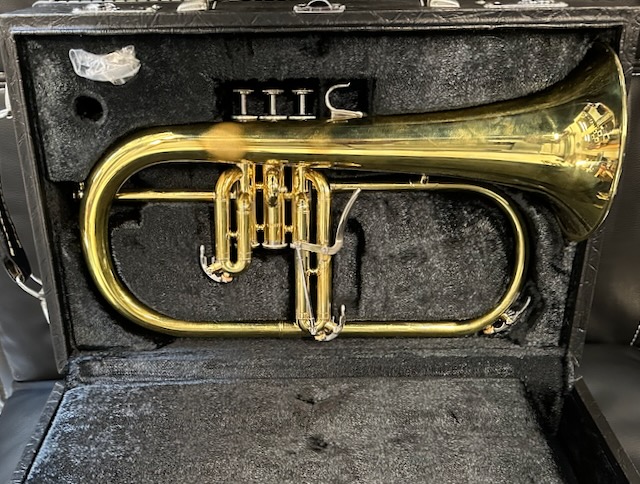
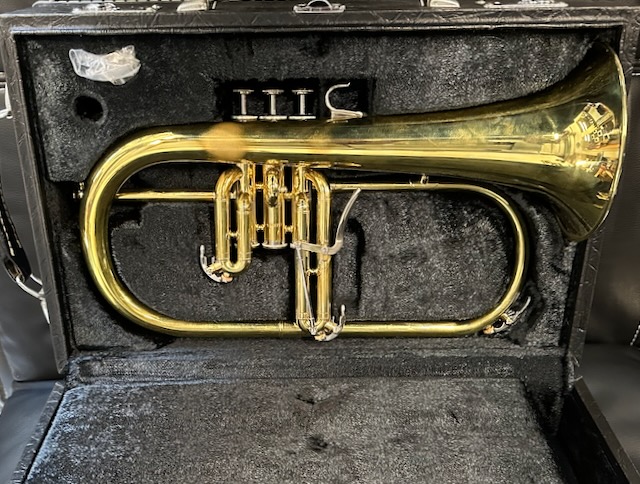
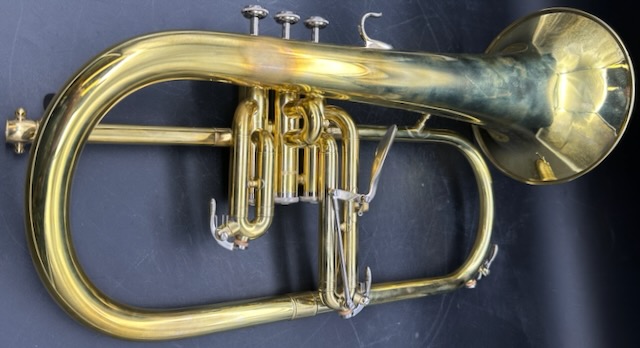
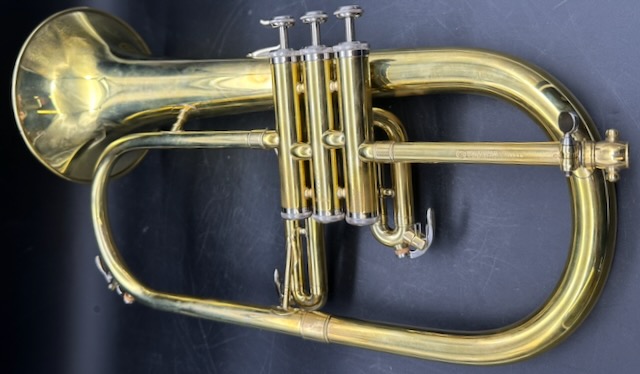
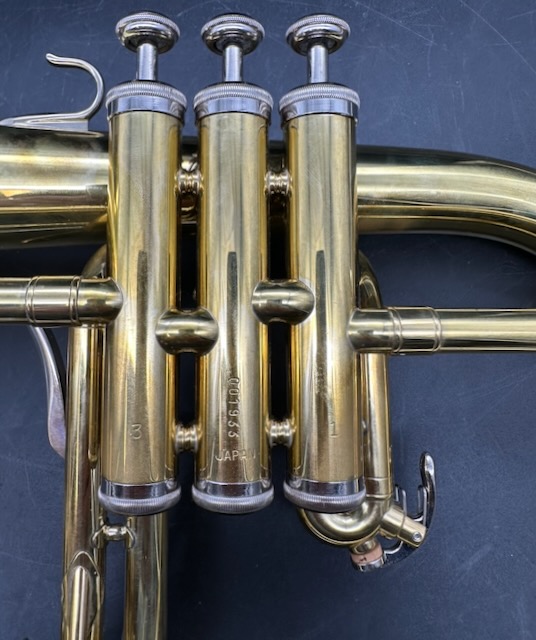
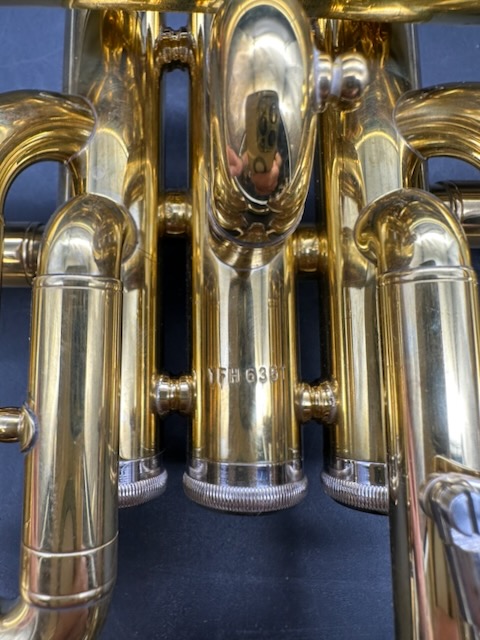
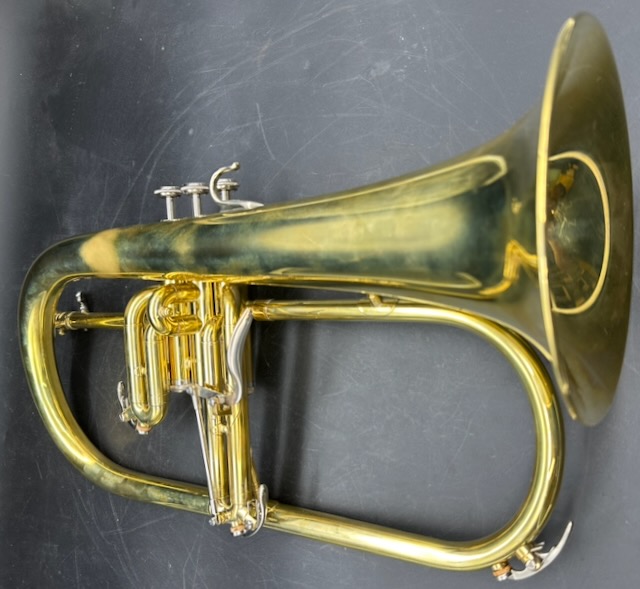
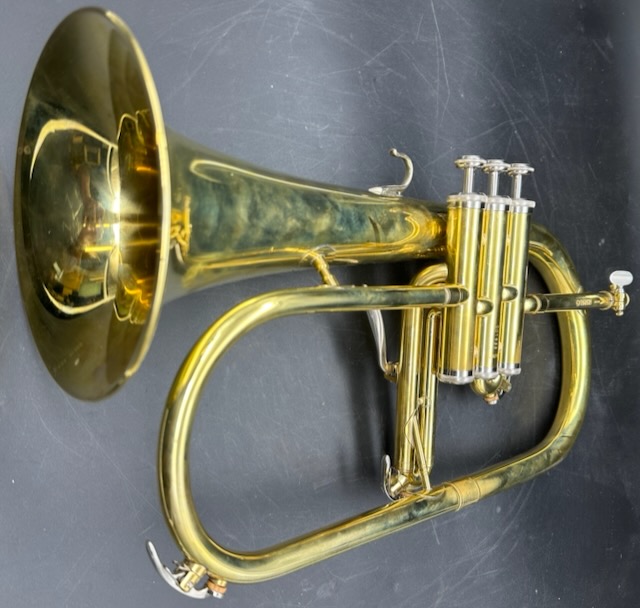
1. Strip Lacquer and bright polish.
2. Remove Lyre
3. PVA/New Valve springs
4. Remove dents & dings
5. Install New ergonomic “Bergeron” trigger lever/screws/springs/water springs and corks (provided)
Model History and Design
The Yamaha YFH-635T was Yamaha’s top-tier flugelhorn prior to the introduction of the Bobby Shew 6310Z. It was specifically designed to emulate the “diffuse and soft” sound of vintage Couesnon and French Besson instruments. YouTube +3
• Bore Size: It features a small .413-inch bore, which is smaller than the standard .433-inch bore found on the 631 and 731 models.
• Bell: It has a 6-inch bell flare, typically made of yellow brass.
• The “T” Designation: The “T” in the model name indicates it is equipped with a trigger on the third valve slide to aid intonation on 1&3. and 1,2,&3, finger combinations.
A raw brass finish on a flugelhorn like the Yamaha YFH-635T primarily benefits the instrument’s resonance and provides a unique aesthetic that evolves over time. Because the metal is not “choked” by a layer of plastic (lacquer), many professional players find it offers a more open feel and a “fluffy,” organic sound.
• Increased Resonance: Lacquer is a thin layer of plastic polymer that can dampen vibrations. Removing it allows the brass to vibrate more freely, often resulting in a more “punchy” or vibrant sound compared to lacquered models.
• Mellow and “Fluffy” Tone: While some believe raw brass is brighter, many flugelhorn players prefer it because it enhances the instrument’s naturally dark, smoky characteristics without the “compact” or “centered” dampening effect of lacquer.
• Free-Blowing Feel: Raw brass instruments are often described as being more “free-blowing,” meaning they offer less resistance to the player’s air.
Aesthetic and Maintenance Benefits
• Natural Patina: Over time, raw brass develops a unique, darkened “patina” based on the player’s skin chemistry and environment. Many jazz musicians value this “well-played” or vintage look.
• Ease of Repair: Future repairs, such as dent removal or soldering, are easier on raw brass because there is no lacquer to burn or scorch during the process.
• No Lacquer Wear: Unlike lacquered horns that eventually show “peeling” or unsightly spots as the finish fails, a raw brass horn ages uniformly.