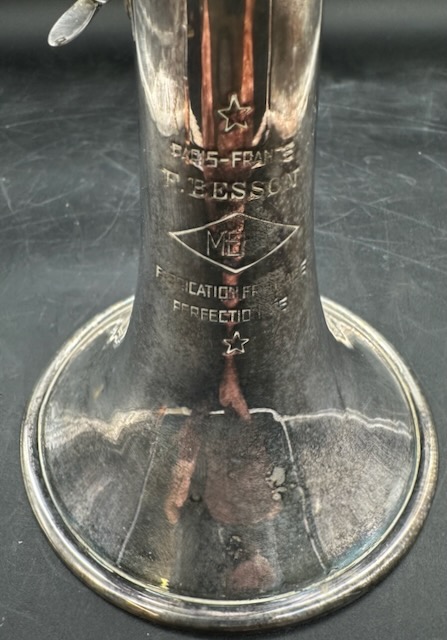
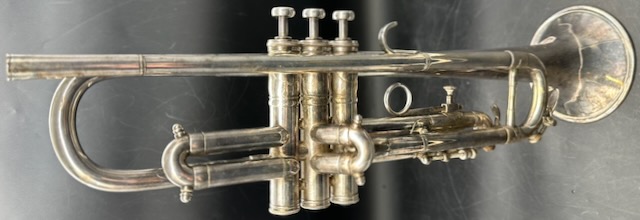
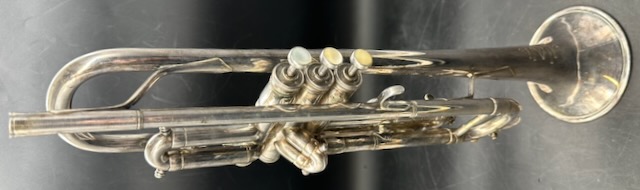
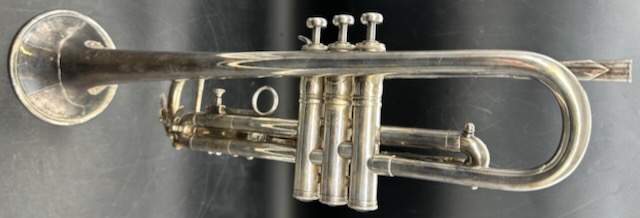
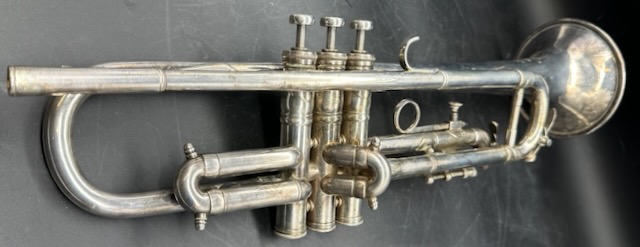
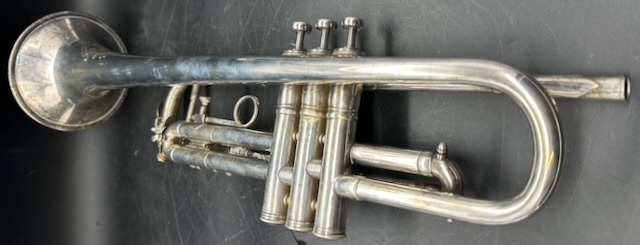
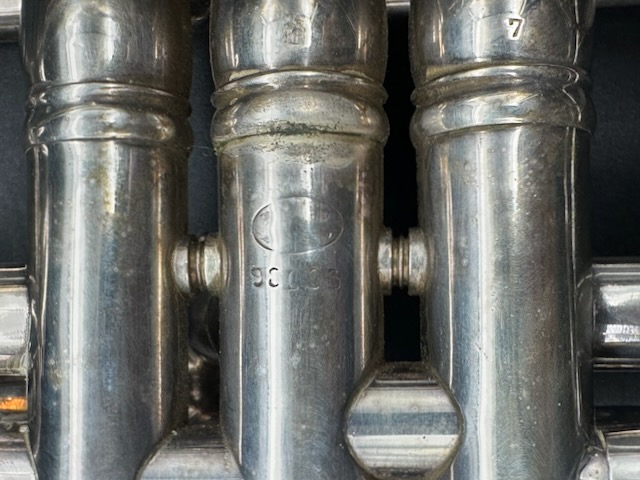
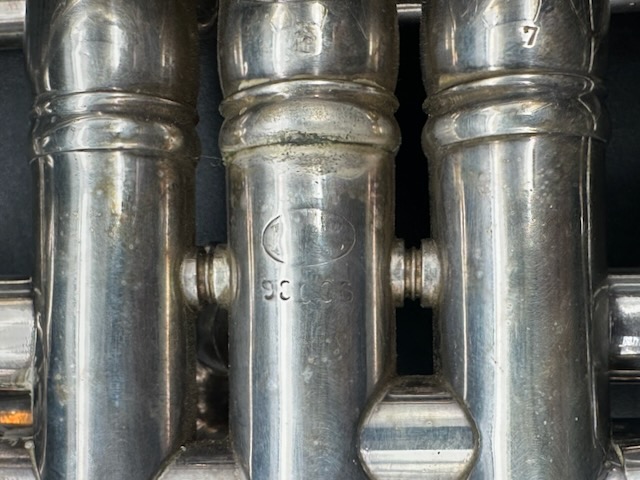
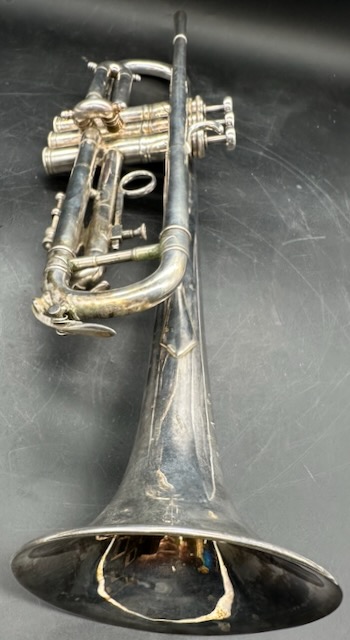
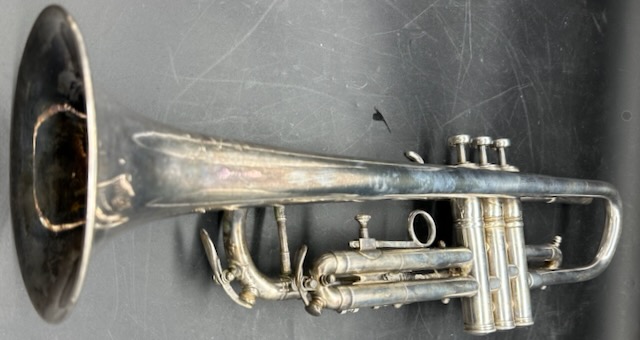
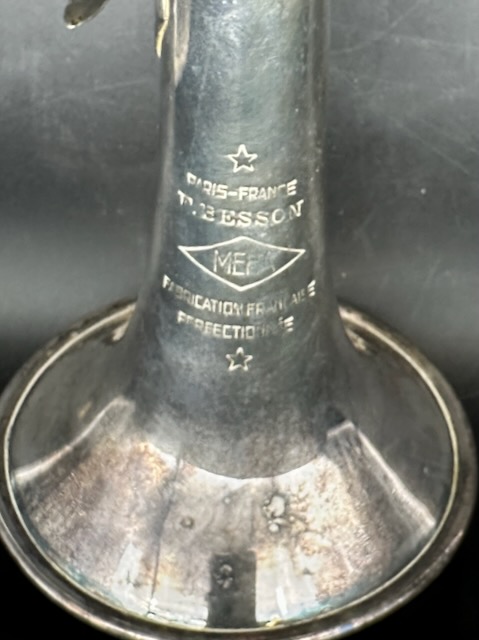
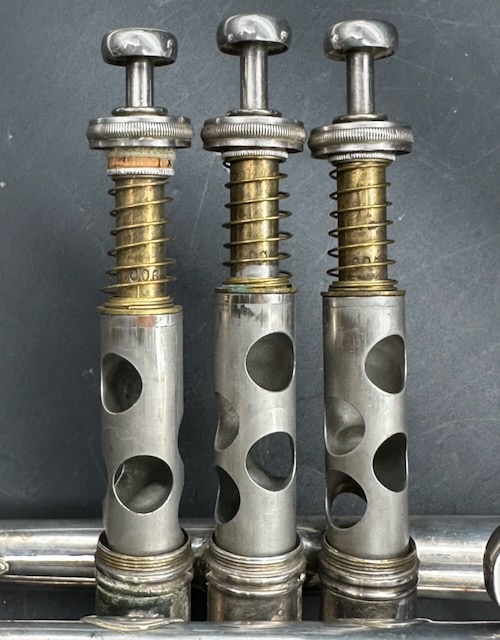
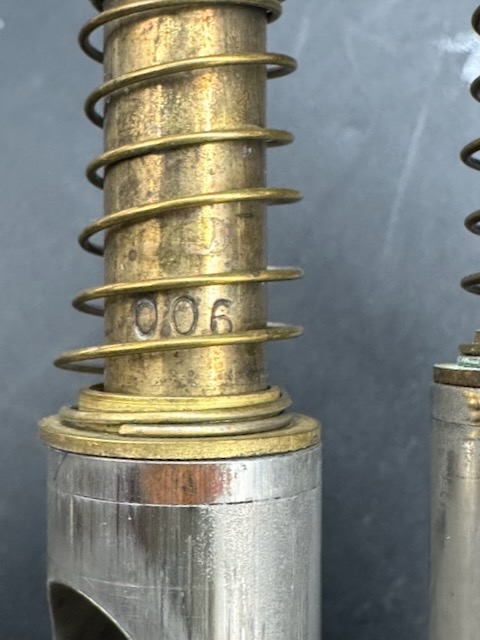
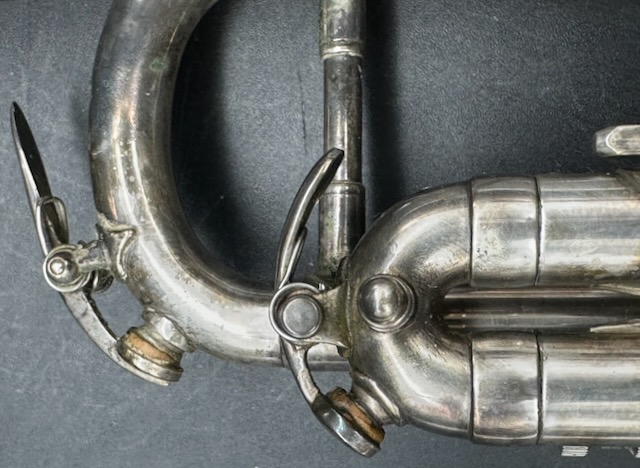
Besson Meha trumpet S/n 98006 (Circa 1945). I was told by the owner who has passed that this horn was owned originally by Donal Byrd.
I have no way to collaborate but the time line checks out.
This horn does not come with a case or mouthpiece but we have plenty of for you to choose from for purchase.
The Besson Meha is highly regarded primarily because it served as the blueprint for the modern professional trumpet. Its innovations in lead-pipe design, bell shape, and overall tubing wrap were so superior that major manufacturers like Bach, Schilke, and Benge essentially copied the design to create their own legendary instruments. This places the instrument in the immediate post-World War II era of French production. During this period, the “Meha” model was the large-bore offering from F. Besson and is highly regarded as the template for many modern professional trumpets.
Quick Production Context
• Manufacturing Location: These early post-war models were made in Paris, France (“Fabrication Française”).
• Later Production: F. Besson production eventually moved; most notably, manufacturing was taken over by ZIGG Kanstul in the USA in 1983.
• Dating Variance: While serial number lists for French Besson are notoriously “sketchy,” #98000–#99000 is widely accepted by experts and historical registries as the 1945–1946 production block.
The French-made Besson trumpets of the early 20th century were the first “truly modern” trumpets, transitioning the instrument from a “vulgar” orchestral tool to a versatile solo instrument.
• The “Meha” vs. “Brevete”: While the Brevete was a popular all-around jazz horn, the Meha was specifically designed as a brighter, large-bore horn. This made it particularly suitable for lead playing and big band settings where projection and a “sparkling” sound were required.
Post-war models (like this horn #98006) are often subject to a popular legend that they were made using recycled mortar shell casings from the war. Whether true or not, the specific French brass and annealing processes used during this era are credited with giving these horns a distinctive “ring” and “feel” that modern mass-produced horns struggle to replicate.
The Meha is known for being a relatively lightweight horn(approximately 1.75 lbs), which contributes to its exceptional projection and ease of playing.
The instrument’s reputation was cemented by its use among the most influential trumpet players in history:
• Jazz Legends: Icons such as Miles Davis, Lee Morgan, and Fats Navarro all played French Besson instruments at various points in their careers.
• Lead Specialists: Famous lead players like Conrad Gozzo favored the Meha for its brilliant sound in big band environments.
• Virtuosos: Rafael Mendez and Claude Gordon both used F. Besson trumpets, which eventually served as the direct inspiration for their own signature models by other brands (Olds and Benge, respectively).
Collectibility and Modern Legacy
Because of their historical role, original French-made Bessons (especially those with serial numbers between 92,000 and 100,000) are considered highly prized collectors’ items. Even later versions, such as those manufactured by Kanstul in the 1980s and 90s, are still regarded as excellent professional-grade instruments because they were built using measurements and tools directly inspired by the original French designs.
The legend of
recycled mortar shell casings is a central piece of trumpet lore specifically tied to French Besson instruments manufactured immediately after World War II (roughly serial numbers #92,000 to #100,000).
The Core of the Legend
The Origin: Following the end of the war in 1945, France faced a severe shortage of raw materials, including the copper and zinc needed to create brass. The legend claims that the F. Besson workshop salvaged brass from the thousands of spent shell casings that littered the French countryside to continue production.
The “Secret Sauce”: Proponents of the legend believe that the intense heat of the initial explosion when the shells were fired “pre-tempered” the metal. This, combined with the subsequent annealing (heating and cooling) used by Besson craftsmen to forge bells and leadpipes, supposedly gave the brass a unique molecular structure.
Sonic Impact: This specific brass is credited with giving these “post-war” horns their “sparkling” or “ringing” quality that collectors and professionals still seek today.
Myth vs. Reality
While widely discussed in the trumpet community, the legend remains unproven:
Virgin French Brass: Some experts suggest the “special” sound actually comes from “virgin” French brass (a specific high-quality alloy ratio unique to the region) rather than battlefield scrap.
Craftsmanship: Others argue the superiority of these horns is due to the handmade construction and the specific mandrels (tools) used in the Paris workshop, rather than the metal’s origin.
Scarcity and Value: Regardless of the metal’s source, the shortage did cause production to be extremely slow during this era. Consequently, horns like your #98006 are rare and highly valued by collectors because they were produced just before the company transitioned to different manufacturing methods and locations.
Since this instrument (Serial #98006) belongs to the highly sought-after 1945–1946 production era, it often commands a premium among collectors of “legendary” French brass