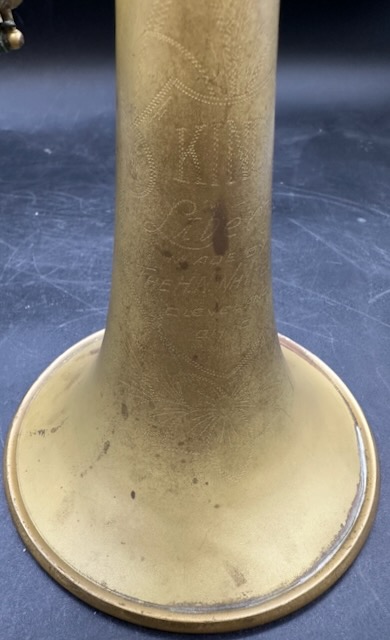
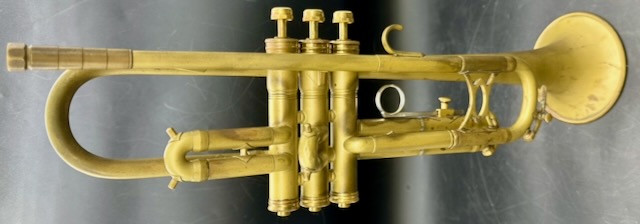
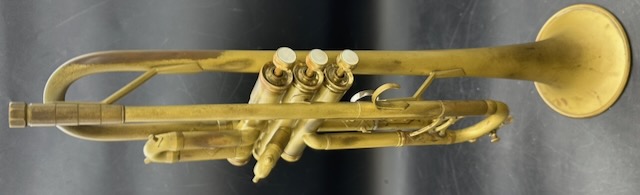
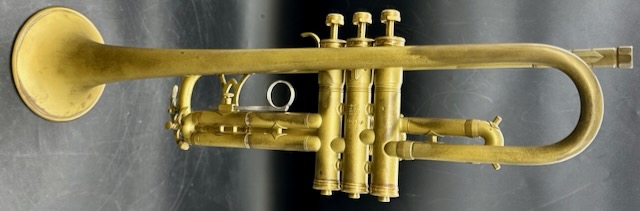
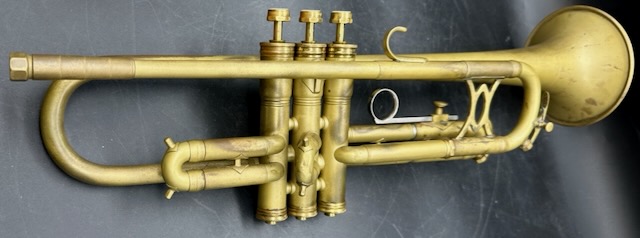
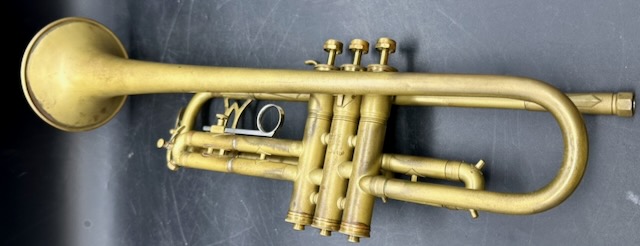
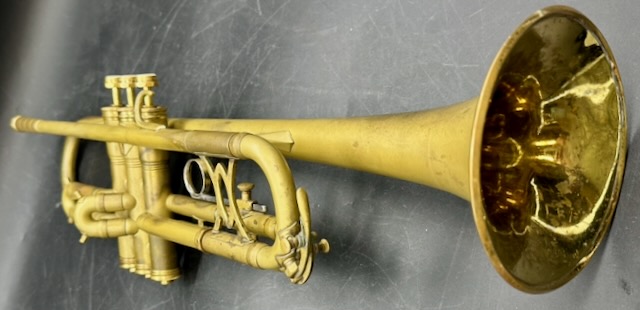
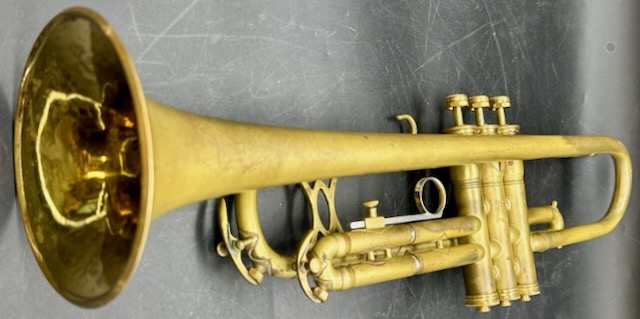
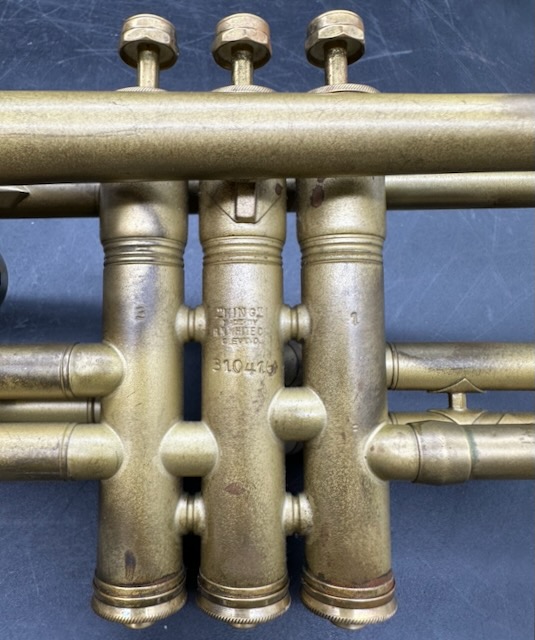
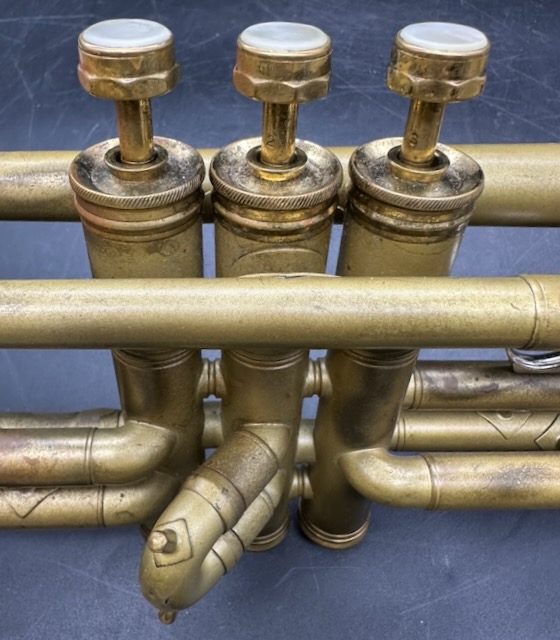
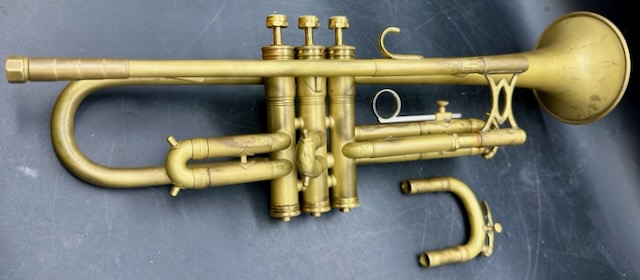
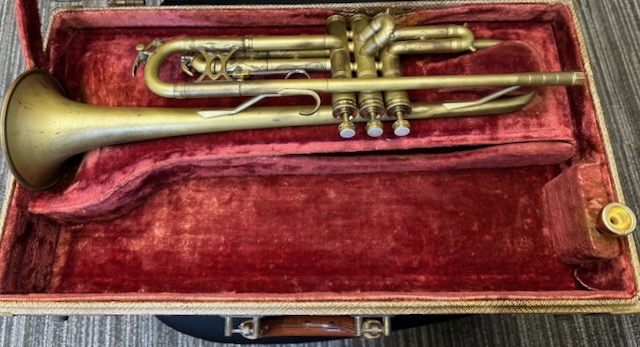
King Liberty S/n 310416 was manufactured in approximately 1950. At this time, the H.N. White Company was producing instruments in Cleveland, Ohio. This specific serial number falls into the transition period where King was refining its iconic professional-grade brass line. The King Liberty was the company’s first major success in the trumpet market, originally debuting in 1920. By the late 1940s and early 1950s, these instruments were highly regarded for their rich, warm tone and exceptional craftsmanship. They were frequently used by professional jazz and big band players of the time. This horn is in raw brass. It plays well and there are no Dents, Dings, or Trauma.
Production Details for S/N 310416
Model: Likely a King Liberty No. 2.
Bore Size: By 1950, the standard Liberty (Model #1050) was typically built with a medium bore (.448″).
Design Features:
It likely features a two-piece bell configuration, which was standard for Liberty models of this era.
The main tuning slide brace design would reflect the 1945 update.
The engraving should include “H.N. White Co.” as the manufacturer.
Standard Liberty (Model 1050): Features a Medium (.448″) bore. This is the most common configuration for Liberty trumpets and is known for being tight and efficient, offering a brighter sound than many modern instruments.
This 1950 King Liberty is primarily a B-flat trumpet, which is the standard key for most modern trumpet music.However, a unique feature of the Liberty model is its ability to also play in the key of A.
How the Dual-Key System Works
In the 1950s, many professional “legit” trumpets were built to be versatile for orchestral or theater pit work where parts were often written in different keys.
Default Key (𝑩♭): With the tuning slide pushed in to its standard position, the horn plays in 𝐵
Secondary Key (A): The main tuning slide on this King Liberty model is designed to be pulled out significantly (or includes a “quick change” stop) to lengthen the air column enough to drop the pitch a half-step to the key of A.
Adjustments: When switched to A, you may need to adjust the individual valve slides slightly to maintain proper intonation.
Why Two Keys?
Musical Flexibility: This allowed players to perform older classical pieces written for “A Trumpet” without having to transpose the music in their heads.
Convenience: It was common for jazz or pit musicians of that era to use the A setting for tunes written in sharps (like E or B major), which become easier to play (G or D major) when the trumpet is in A.
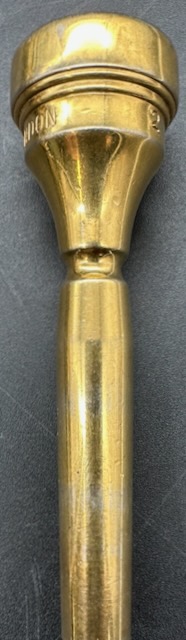
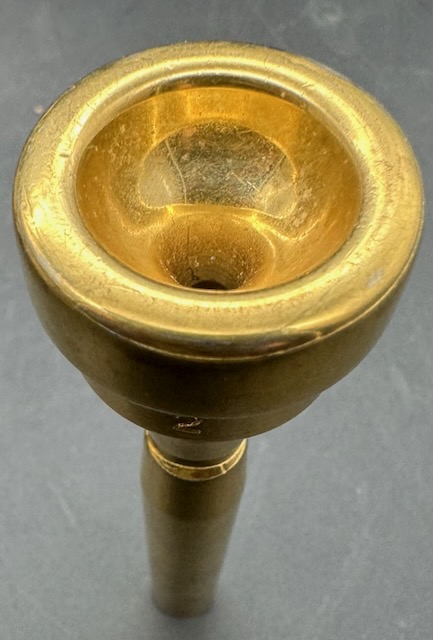
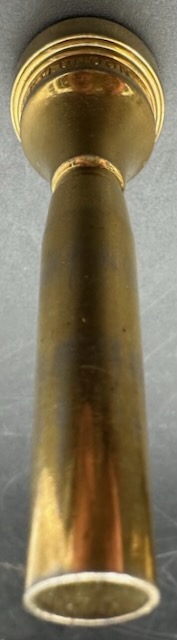
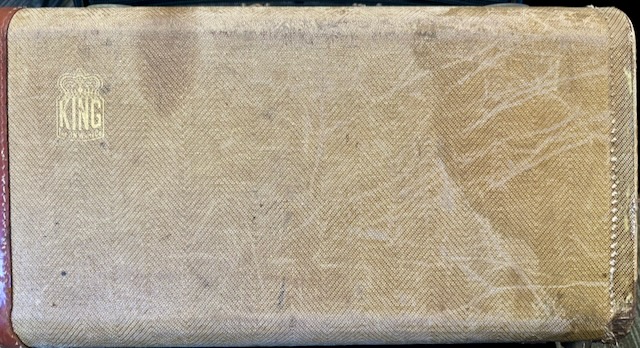
This horn comes with the original case and a Denis Wick #2 mouthpiece in gold plate