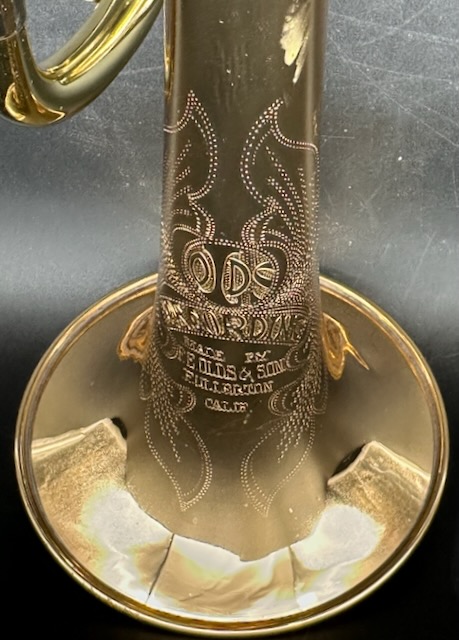
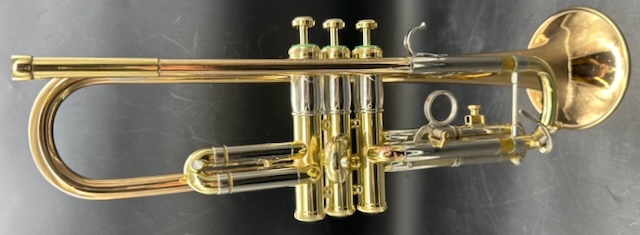
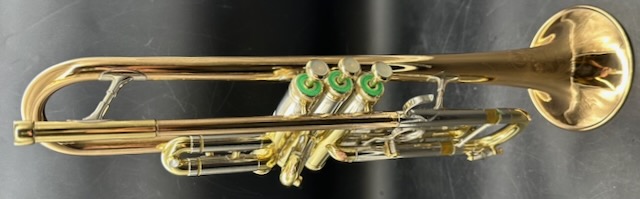
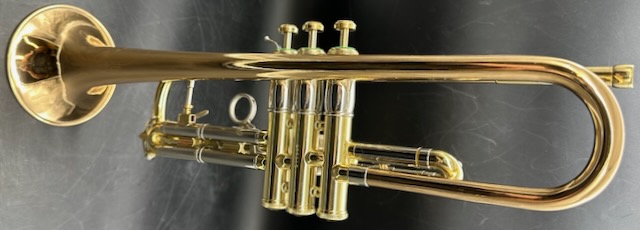
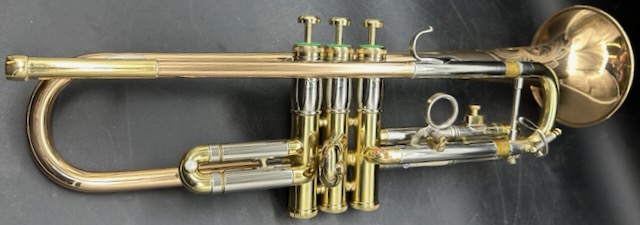
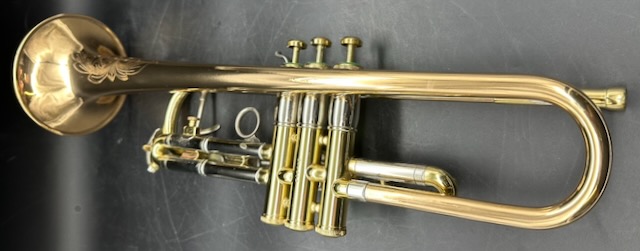
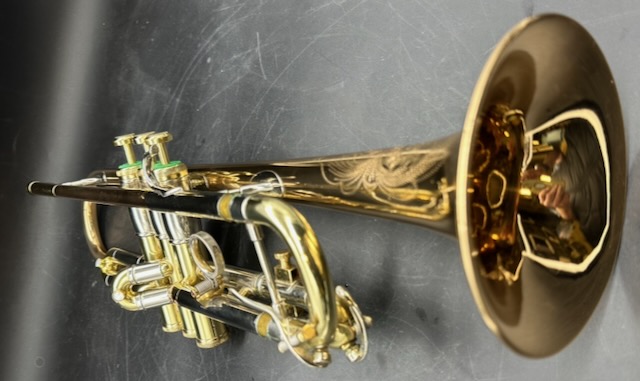
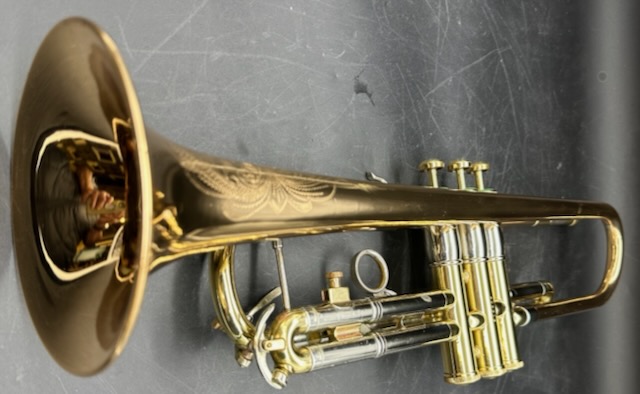
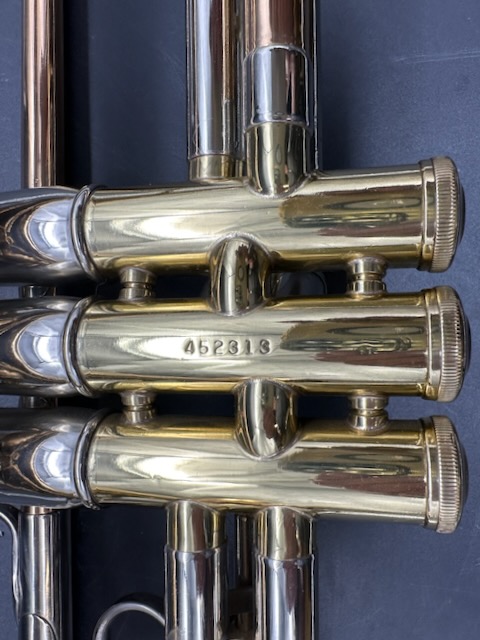
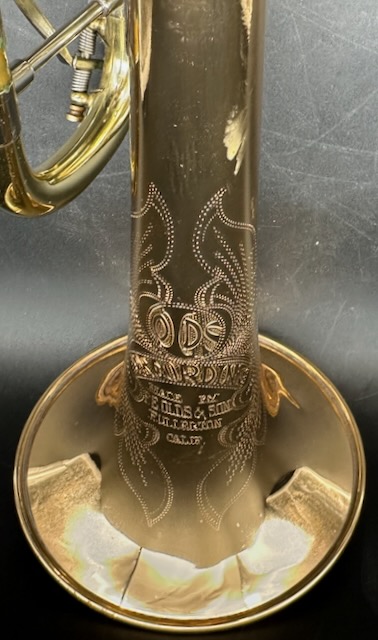
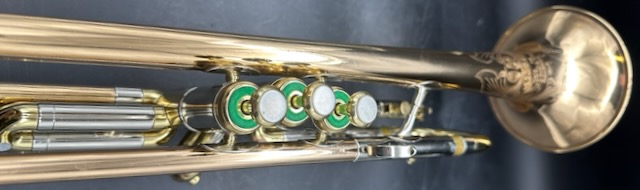
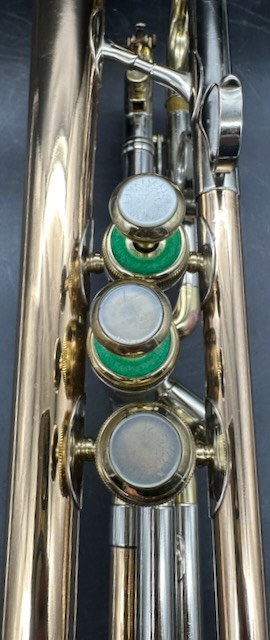
Olds Recording S/n 452313. Made in the Heyday of Olds in Fullerton California.
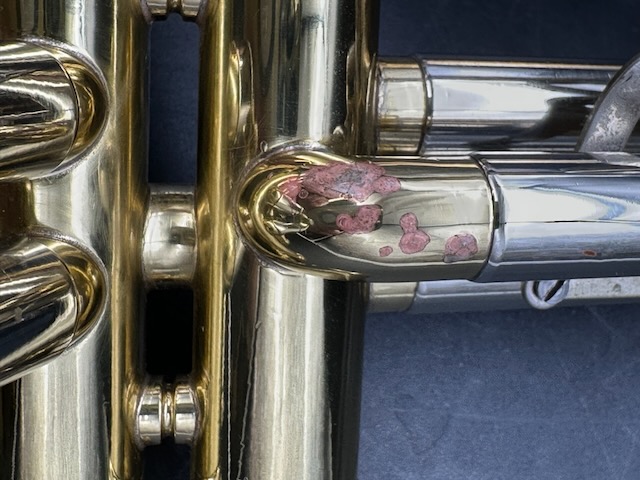
A few dents and some corrosion on the bottom leg of the tuning slide where the slide tube goes into the 3rd valve knuckle.
Based on the serial number (452313) This Recording Model was manufactured around 1964.
Factory Location: By 1964, production had moved from Los Angeles to the Fullerton, California factory.
Model Features: The Recording model from this period is known for its “Rey-O-Loy” (copper) bell and leadpipe, and an offset second valve.
Context: The 450,000 serial number range corresponds to the timeframe of the company’s alliance with Norlin Music.
This instrument was built during the Fullerton era, which is generally regarded as a time of high-quality production for F.E. Olds.
Key Features of the 1964 Olds Recording
“Re-O-Loy” Bell: Your trumpet features a bell made from a high-copper-content red brass, which provides the model’s signature warm, rich tone.
Balanced Action: The valve section is positioned further forward than on standard trumpets, and the second valve is offset to the left to more naturally fit the player’s fingers.
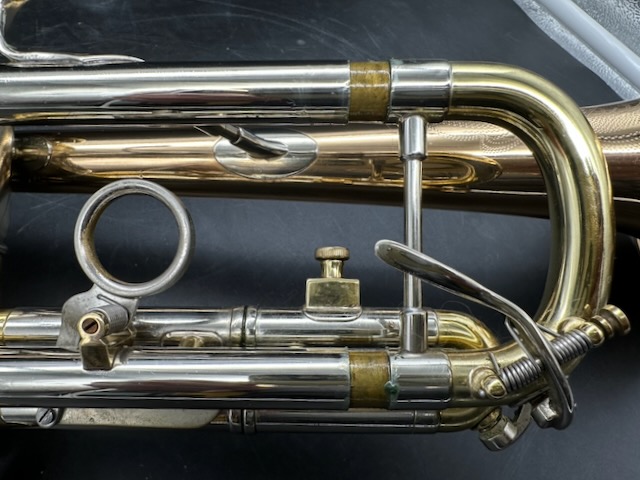
Third Slide Trigger: This model includes a spring-loaded trigger on the third valve slide to aid in intonation.
Tri-Tone Finish: These horns often featured a combination of copper, yellow brass, and nickel silver trim, creating a distinct aesthetic
The Olds Recording is widely considered one of the most innovative and visually striking trumpets ever mass-produced. It wasn’t just built for performance; it was engineered to solve ergonomic and acoustic challenges that professional players faced during the “Golden Age” of recording.The Origins: A Response to the Studio Era
Introduced in the late 1930s, the Recording model was named to appeal to the growing market of studio and radio musicians. These players spent hours behind a microphone and needed an instrument that was:
• Ergonomically Comfortable: For long sessions.
• Tonally Rich: To sound “fat” and warm on early recording equipment.
• Perfectly Intonated: Because microphones are unforgiving of out-of-tune notes.
The Engineering Breakthroughs
The Recording model introduced several features that were revolutionary at the time and remain unique today:
• The Balanced Action: Olds moved the valve cluster further forward toward the bell. This shifted the center of gravity, making the horn feel lighter in the hand and reducing wrist fatigue.
• The Offset Second Valve: If you look down at your valves, you’ll notice the second valve is slightly out of line with the first and third. This was designed to mimic the natural curvature of the human hand.
• Rey-O-Loy (Red Brass): Most trumpets of that era were yellow brass. Olds used a proprietary high-copper alloy (Rey-O-Loy) for the bell and leadpipe. This gave the Recording its “dark” and “smoky” sound that cut through a studio mix without being shrill.
The “Fullerton” Transition Your 1964 model comes from the Fullerton era.
• Pre-1954: These are “Los Angeles” horns, often handmade in smaller batches. They are highly coveted by collectors but can be inconsistent.
• Post-1954 (Your horn): Production moved to a massive, modern factory in Fullerton, California. While some purists prefer the L.A. horns, the Fullerton-era Recordings are famous for their superior mechanical precision and incredibly tight valve tolerances.
Why It’s a Legend Today
The Olds Recording was never a “lead” trumpet meant to scream over a big band; it was a “soloist’s” instrument. It fell out of favor in the late 70s as the industry shifted toward the “Bach Stradivarius” sound, which was brighter and more uniform. Today, the Recording is a cult classic. Because F.E. Olds & Son went out of business in 1979, these horns are no longer made, making well-preserved 1960s models like this one highly desirable for jazz and small-ensemble players.
Very Good Condition: Most of the original lacquer is intact (at least 90–95%), valves are smooth with good compression, and all slides move freely.